
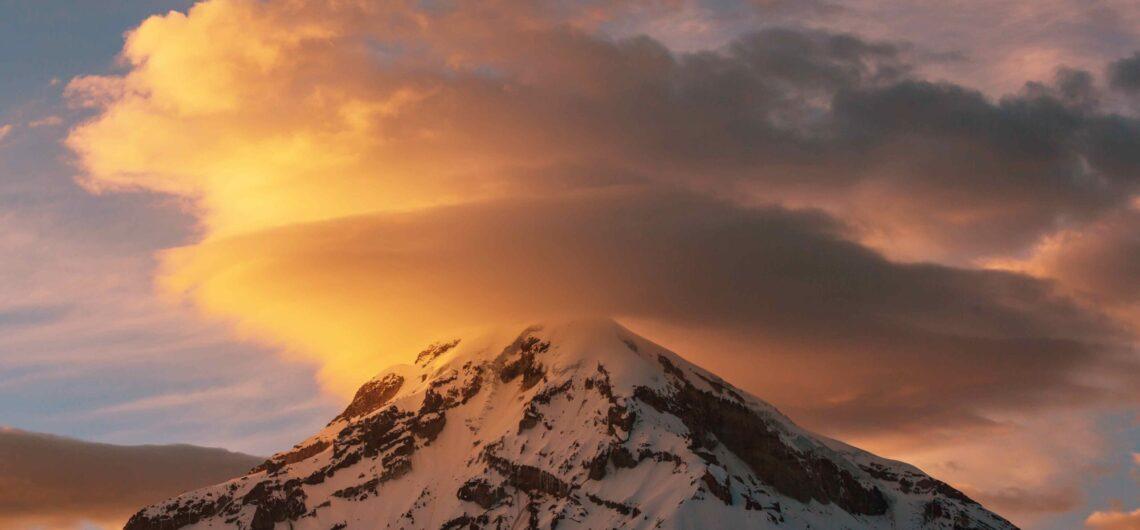
Ecuador is famous for its volcanic landscapes, cloud forests, and the unique wildlife of the Galapagos Islands. But beyond its Pacific islands and tropical forests, the country is also home to some of the most impressive peaks in the Andes mountain range.
When travelers ask, “What is the highest mountain in Ecuador?”, the answer is Mount Chimborazo. This snow-capped stratovolcano reaches an elevation of approximately 6,263 meters (20,548 feet) above sea level, making it the highest mountain in the country.
Chimborazo is not only significant for its height within Ecuador. Due to the Earth’s equatorial bulge, its summit is considered the farthest point on the planet’s surface from the center of the Earth, making it a truly unique destination for adventure seekers, nature lovers, and travelers interested in geography and geology.
Understanding why Chimborazo holds this title, where it is located, and how it compares to other famous peaks such as Cotopaxi will help you better appreciate Ecuador’s diverse and dramatic highland landscapes.
Where Is Ecuador’s Highest Mountain Located?
Chimborazo is located in the central Andes of Ecuador, in the province that shares its name: Chimborazo Province. The closest major city is Riobamba, which often serves as the main base for trips and excursions to the volcano.
The mountain rises within the Chimborazo Fauna Production Reserve (Reserva de Producción de Fauna Chimborazo), a protected area created to conserve the high Andean ecosystems and native wildlife. The landscape around Chimborazo is dominated by páramo, a high-altitude grassland ecosystem characterized by tough grasses, shrubs, and hardy plants that are adapted to cold temperatures, strong winds, and intense solar radiation.
Chimborazo is relatively accessible compared to some other high Andean peaks. It can be reached by road from several cities:
- From Quito, Ecuador’s capital, the journey takes around 4–5 hours by vehicle, depending on traffic and road conditions.
- From Guayaquil, on the coast, it usually takes 6–7 hours to reach the highlands near Riobamba.
- From Cuenca, another important Andean city, it is also possible to travel overland to Riobamba and then to the mountain.
This relatively good access, combined with its impressive height and unique geographical status, has made Chimborazo a popular destination for both climbers and visitors who simply wish to enjoy the views without undertaking technical ascents.
Chimborazo vs. Cotopaxi: Which Mountain Is Really Higher?
Many travelers become confused when reading about Ecuador’s mountains, especially when they see that Cotopaxi is also often mentioned as one of the country’s most important peaks. It is natural to wonder: if Chimborazo is the highest mountain in Ecuador, what makes Cotopaxi so famous, and how do they compare?
Chimborazo is the highest mountain in Ecuador in terms of elevation above sea level, at approximately 6,263 meters. Cotopaxi, on the other hand, reaches about 5,897 meters (19,347 feet) above sea level, making it lower than Chimborazo. However, Cotopaxi is one of the highest active volcanoes in the world, which gives it a special status and attracts many visitors and climbers.
While Cotopaxi has a perfectly symmetrical cone and is easily visible from Quito on clear days, Chimborazo stands out because of its massive, broad shape and its unique geographical distinction related to the Earth’s form.
The Closest Point on Earth to the Sun
One of the most fascinating facts about Chimborazo is that, due to the Earth’s equatorial bulge, its summit is considered the closest point on Earth to the sun and the farthest from the planet’s center.
The Earth is not a perfect sphere; it is slightly flattened at the poles and wider around the equator. This means that mountains located near the equator start from a higher “baseline” relative to the center of the planet. Because Chimborazo sits just one degree south of the equator, its summit benefits from this extra distance.
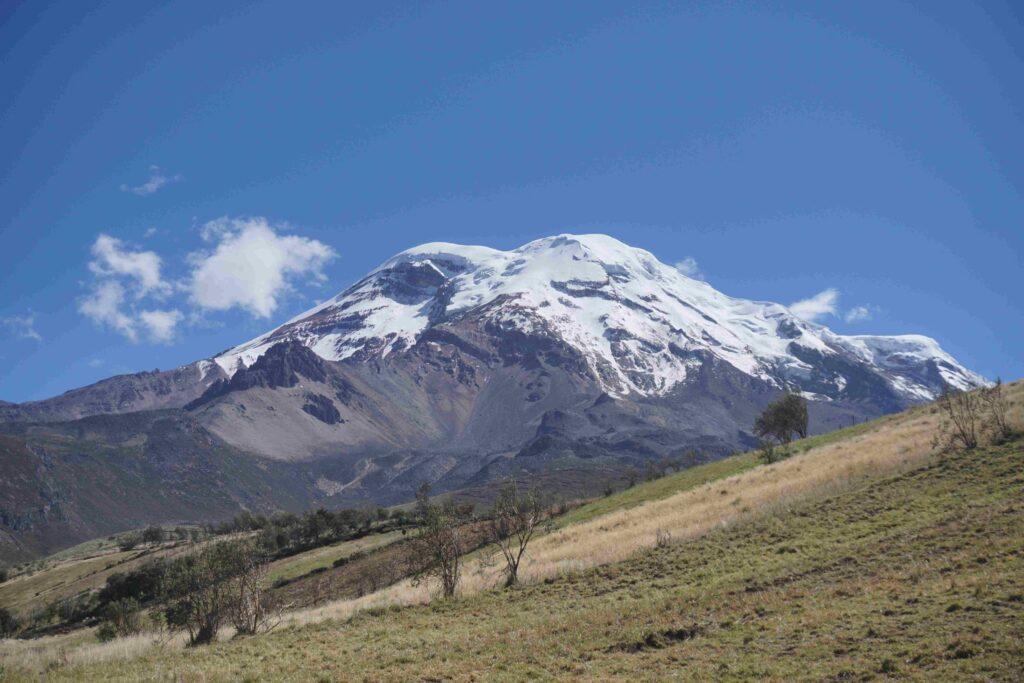
As a result, even though Mount Everest has a higher elevation above sea level, the tip of Chimborazo is actually farther from the Earth’s center. For travelers interested in geography, geology, and unique records, standing on or near Chimborazo is a remarkable experience: you are, in a very real sense, as close to the sun as you can be while still standing on solid ground.
Wildlife and Ecosystems around Chimborazo
Chimborazo is not only an impressive mountain; it also supports a variety of high-altitude ecosystems that host unique flora and fauna. The surrounding Chimborazo Fauna Production Reserve was established to protect these environments and the species that inhabit them.
At these elevations, vegetation is dominated by páramo grasses and shrubs, with plants adapted to cold nights, strong winds, and intense ultraviolet radiation. One characteristic plant of the area is the chuquiragua, often referred to locally as the “flower of the Andes,” which attracts hummingbirds with its bright orange blossoms.
Among the animals that can be seen in the reserve are:
- Vicuñas: These graceful camelids were reintroduced to the area after having disappeared from Ecuador. Today, they roam freely across the slopes of Chimborazo.
- Llamas and alpacas: Domesticated camelids that are often seen grazing and are closely linked to traditional Andean culture.
- Andean condors: Although sightings are not guaranteed, the condor, one of the largest flying birds in the world, can sometimes be observed soaring above the highlands.
- Other bird species: Including caracaras, hawks, and various hummingbirds that are adapted to the high-altitude environment.
The combination of snow-capped peaks, wide open grasslands, and the presence of these emblematic species makes Chimborazo an ideal destination for nature enthusiasts, wildlife watchers, and photographers.
How to Visit Chimborazo: Routes and Activities
Visiting Chimborazo does not necessarily mean you must climb to the summit. Many travelers choose to explore its lower slopes, viewpoints, and visitor facilities without engaging in technical mountaineering.
Most trips to Chimborazo begin in Riobamba, where local agencies and guides offer excursions to the mountain. From the access road, vehicles can reach the Carrel Refuge, located at an altitude of around 4,800–4,900 meters above sea level. This refuge serves as a starting point for short hikes and acclimatization walks.
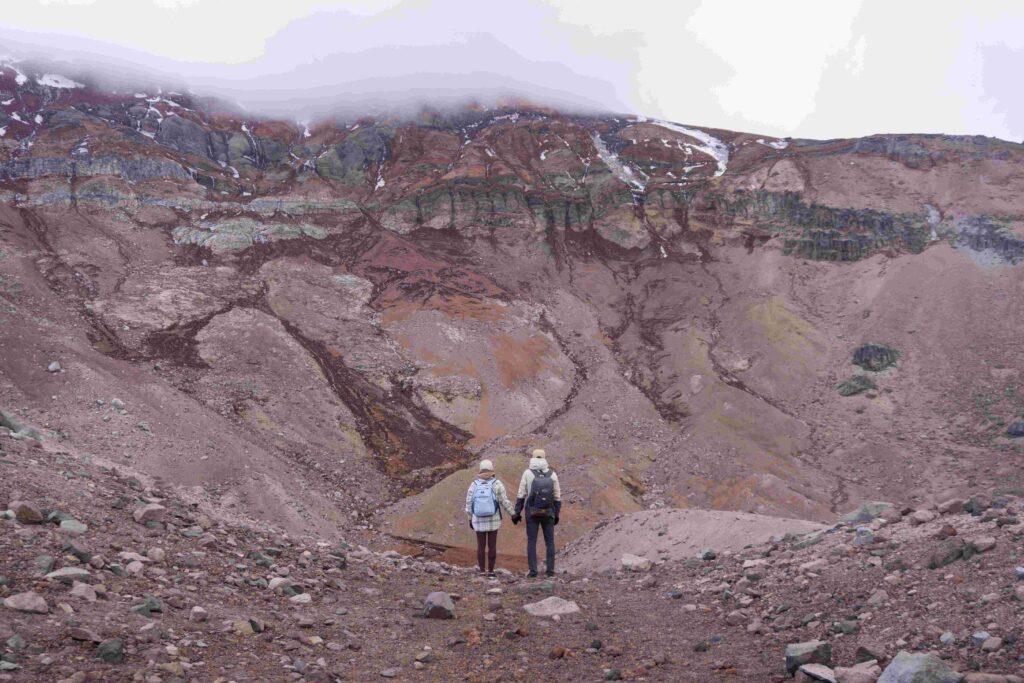
From the Carrel Refuge, it is possible to hike up to a higher point near the Whymper Refuge area, at about 5,000 meters. This route involves walking on a steep, rocky path but does not require technical climbing equipment for those who stop at the refuge and viewpoints. The views from these elevations are spectacular, especially on clear days, when the surrounding Andean landscape opens up in all directions.
Popular Viewpoints and Non-Technical Routes
For visitors who prefer non-technical routes, there are several options to experience Chimborazo safely and comfortably:
- Carrel Refuge Viewpoints: From the parking area and refuge, short walks lead to panoramic points with views of the glaciers and the surrounding reserve.
- Hike toward Whymper Refuge: A relatively short but challenging walk due to the altitude, offering a sense of high-mountain adventure without requiring ropes or advanced gear.
- Scenic stops in the reserve: Along the access roads, there are viewpoints where you can observe vicuñas, take photos of the mountain, and appreciate the vastness of the Andean páramo.
Additionally, some tours include mountain biking routes that descend from the high slopes of Chimborazo toward lower elevations, offering an adventurous way to experience the landscape.
When Is the Best Time to Visit Chimborazo?
Weather in the Ecuadorian Andes can be variable at any time of year, but there are generally drier and more stable periods that are better for visiting high-altitude destinations like Chimborazo.
Typically, the months from June to September are considered part of the drier season in many highland areas, with more chances of clear skies and good visibility. Another relatively favorable period can be from December to February. However, conditions can change quickly, and it is always important to be prepared for cold, wind, and sudden cloud cover.
Regardless of the month, morning hours often offer the clearest views, as clouds tend to build later in the day. Planning an early departure from Riobamba or nearby towns increases your chances of seeing Chimborazo’s summit without cloud cover.
Safety and Altitude Tips for Visiting Chimborazo
Due to its extreme elevation, visiting Chimborazo requires some preparation and caution, even if you only plan to reach the refuges and viewpoints rather than the summit.
Here are some important tips to keep in mind:
- Acclimatize properly: Spend a few days in highland cities such as Quito, Riobamba, or Cuenca before visiting Chimborazo to allow your body to adjust to the altitude.
- Ascend gradually: Avoid rushing. Walk slowly, take breaks, and listen to your body.
- Recognize symptoms of altitude sickness: Headache, nausea, dizziness, and shortness of breath can indicate altitude-related problems. If you feel unwell, it is important to stop, rest, and, if necessary, descend to a lower altitude.
- Dress in layers: Temperatures can change rapidly. Wear thermal layers, a windproof jacket, hat, gloves, and appropriate footwear.
- Protect yourself from the sun: At high altitudes, ultraviolet radiation is very strong. Use sunscreen, sunglasses, and a hat.
- Go with an experienced guide: Local guides are familiar with the conditions and can help ensure a safe and enjoyable visit.
By respecting the mountain, following local regulations, and being prepared for the conditions, you can enjoy Chimborazo in a responsible and memorable way.
Planning Your Trip to Ecuador with Nature Galapagos
If you are planning a trip to Ecuador, combining the country’s Andean highlands with the Galapagos Islands can offer a complete and unforgettable travel experience. After exploring the snow-capped peak of Chimborazo and the cultural richness of highland cities, you can continue your journey to the Galapagos to discover their unique wildlife and marine ecosystems.
With Nature Galapagos, you can organize itineraries that include both mainland highlights, such as Chimborazo and other volcanoes of the Avenue of the Volcanoes, and cruises or island-hopping programs in the Galapagos.
Our team can help you:
- Choose the best time of year to visit both the Andes and the Galapagos.
- Plan acclimatization days in highland cities before visiting high-altitude areas.
- Coordinate guided excursions to Chimborazo and other scenic regions.
- Select the Galapagos itinerary that best matches your interests in wildlife, snorkeling, or hiking.
Whether you are fascinated by the idea of standing near the closest point on Earth to the sun or dreaming of swimming alongside sea lions and marine iguanas, Ecuador offers both experiences in a single country. Carefully planning your visit with experienced local operators will help you make the most of your time and fully enjoy everything Ecuador has to offer.

