
The Galapagos Islands are a unique destination in the world. This volcanic archipelago in the Ecuadorian Pacific harbors species that exist nowhere else on the planet. Planning your trip may seem complicated, but with the right information, you’ll organize the perfect adventure.
Requirements to travel to Galapagos
Before flying to the islands, you need to meet certain requirements. You must complete the Transit Control Card (TCT) online before your flight. Upon arriving at the Galapagos airport, you’ll pay the National Park entrance fee: $100 USD for foreign adults and $50 USD for minors.
Your luggage will go through rigorous inspection. You cannot bring fresh food, seeds, or animal products to protect the delicate ecosystem. It’s essential to know all the requirements to enter the Galapagos Islands in advance.
When to visit Galapagos
Galapagos can be visited year-round, but each season offers different experiences.
Warm season (December to May)
The weather is warmer and sunnier, with water temperatures around 24°C. It’s breeding season for many species: sea turtles nest, land iguanas mate, and birds display their most colorful plumage. Days are mostly clear, perfect for photography.
Cool season (June to November)
The Humboldt Current cools the waters to about 18-20°C, bringing nutrients that attract more marine life. You’ll see more whale, manta ray, and shark activity. Although the sky can be cloudy with occasional drizzles, underwater visibility is excellent. It’s the best time for diving.
This is the most important decision when planning your trip. Both options have clear advantages.
Galapagos cruises
Cruises take you to more remote and less visited islands. You wake up each day in a different place, maximizing your time. Boats range from luxury yachts to more economical vessels.
Advantages: access to remote sites, efficient itinerary, all meals included, specialized naturalist guides on board.
Disadvantages: can cause seasickness, less flexibility, higher initial cost.
Land tours (island hopping)
You stay in hotels on inhabited islands (Santa Cruz, San Cristobal, Isabela) and take daily excursions. Offers more freedom to explore at your own pace.
Advantages: more economical, greater flexibility, avoid seasickness, experience local life.
Disadvantages: fewer islands visited, more time in transfers, must organize each activity.
Budget for your trip
Galapagos is not an economical destination, but you can adjust it according to your budget.
Budget option ($100-150 USD/day)
Simple hotels, shared daily tours, meals at local restaurants. Enough for an excellent experience.
Mid-range ($200-350 USD/day)
Comfortable hotels, better tour selection, some more exclusive restaurants. Tourist/superior tourist category cruises.
Luxury ($500+ USD/day)
First-class or luxury cruises, boutique hotels, private tours, exclusive experiences.
Don’t forget the cost of flights from mainland Ecuador ($350-500 USD round trip), park entrance ($100 USD), and TCT ($20 USD).
What to see and do in Galapagos
Snorkeling and diving
Snorkeling in Galapagos is extraordinary. You’ll swim with playful sea lions, sea turtles, penguins, and reef sharks. The best sites include Kicker Rock, Lava Tunnels in Isabela, and Gardner Bay in Española.
For certified divers, Galapagos offers some of the world’s best sites. You’ll see hammerhead sharks, giant manta rays, and schools of fish in strong currents.
Volcanic hikes
The islands are volcanic and offer surreal landscapes. The excursion to the sulfur mines at Sierra Negra Volcano is impressive: you’ll walk on active volcanic terrain with fumaroles and impossibly colored craters.
Wildlife observation
Giant tortoises are the symbol of Galapagos. You can see them in their natural habitat in the highlands of Santa Cruz and Isabela, or at breeding centers like the Charles Darwin Station.
Blue-footed and red-footed boobies perform fascinating mating dances. Marine iguanas, unique in the world, warm themselves in the sun after diving for algae.
Practical tips
What to pack
- Swimsuit and rash guard
- Biodegradable sunscreen (mandatory)
- Shoes for walking on volcanic rocks
- Waterproof camera
- Seasickness medication if choosing cruise
- Light clothing and windbreaker for evenings
Safety and rules
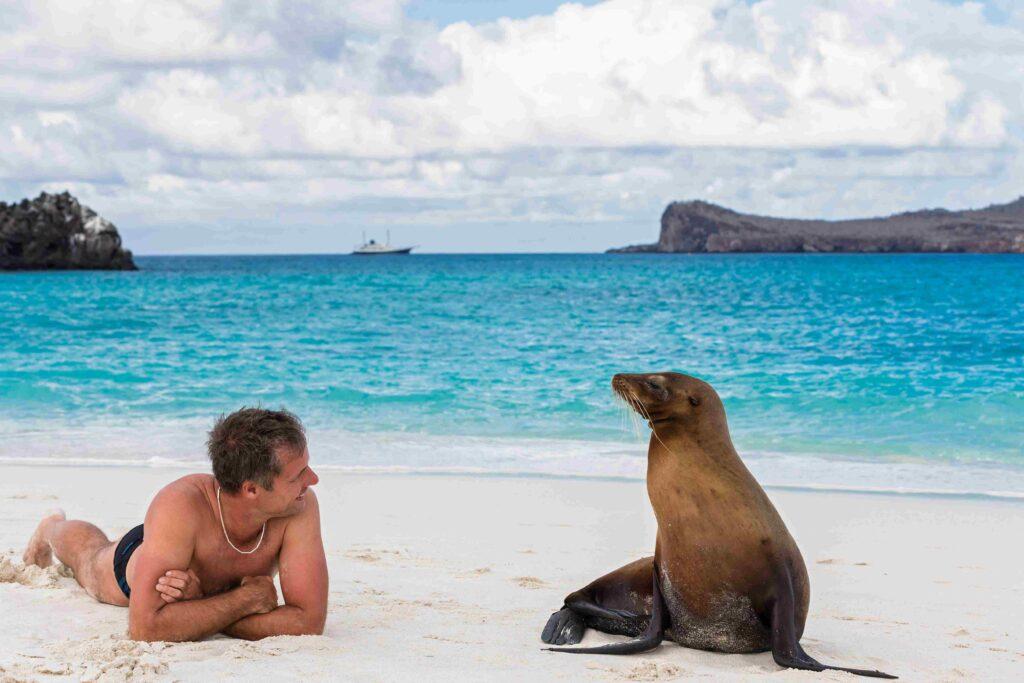
Always maintain 2 meters distance from animals. Don’t touch anything, don’t feed wildlife, and take all your trash with you. Fines for breaking the rules are severe.
Connectivity
Internet is limited and slow on the islands. Use this time to disconnect and enjoy nature. Only inhabited islands have decent mobile coverage.
Combining Galapagos with mainland Ecuador
Many travelers combine Galapagos with other Ecuadorian destinations. Quito, the capital, offers an impressive colonial historic center. Following our tips on how to stay safe in Quito, you’ll enjoy this Andean city without problems.
Baños de Agua Santa is perfect for adventure: rafting, bungee jumping, and spectacular waterfalls. The Ecuadorian Amazon will immerse you in the world’s most biodiverse rainforest.
Suggested itinerary
5 days in Galapagos
- Day 1: Arrival to San Cristobal, La Lobería beach
- Day 2: Kicker Rock snorkel, interpretation center
- Day 3: Transfer to Isabela, Los Túneles
- Day 4: Sierra Negra Volcano and sulfur mines
- Day 5: Santa Cruz, giant tortoises, return flight
8 days in Galapagos
Add more islands and activities: Española, Floreana, Tortuga Bay, North Seymour. You’ll have time to dive, explore more trails, and relax.
Booking your trip
Book in advance, especially for high season (June-August and December-January). Cruises fill up months in advance. For land tours, you have more flexibility, but the best hotels sell out quickly.
Work with operators specialized in Galapagos who know the destination and can design the perfect itinerary according to your interests and budget.
Your Galapagos adventure awaits
Galapagos will change your perspective on nature and conservation. Swimming alongside sea turtles, watching the dance of the boobies, walking on volcanic lava, and contemplating Pacific sunsets are experiences that will stay with you forever.
Planning is key to making the most of this unique destination. With this guide, you’re ready to organize your adventure on the islands that inspired the theory of evolution.

