
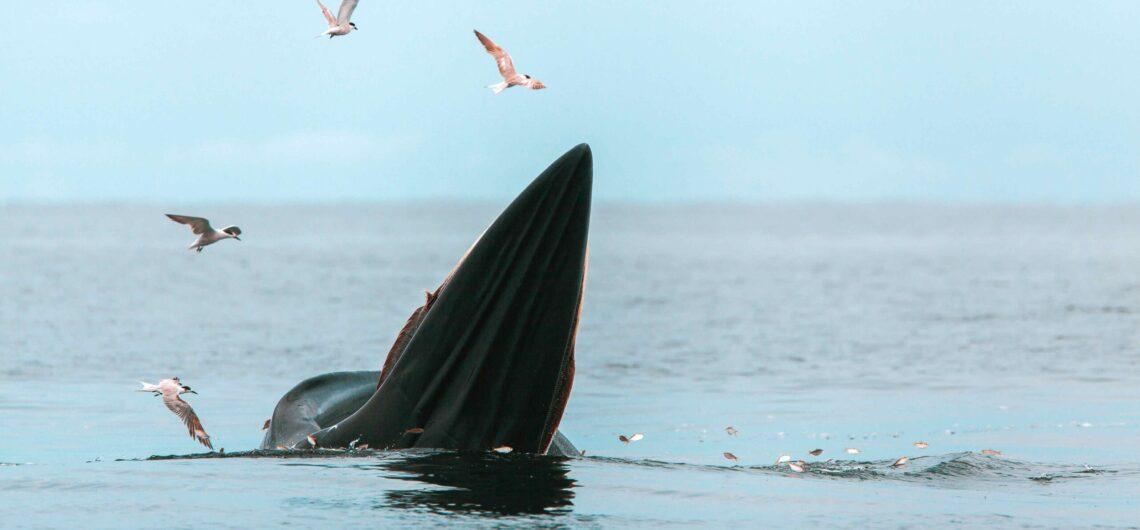
Every year, between June and September, Ecuador’s coasts become the stage for one of the Pacific’s most impressive natural spectacles: the arrival of humpback whales. These marine giants travel thousands of kilometers from Antarctica to reproduce and raise their calves in Ecuador’s warm waters.
Ecuador offers some of the world’s best opportunities to see whales in their natural habitat, with close encounters, spectacular breaches, and the privilege of observing unique reproductive behaviors.
Why whales choose Ecuador
Humpback whales make one of the longest migrations in the animal kingdom. They travel over 8,000 kilometers from Antarctic cold waters to Ecuador, seeking warm waters to mate and give birth.
Ecuador offers perfect conditions: ideal water temperature between 24-26°C, calm protected waters, and abundant food in ocean currents. The country’s location on the terrestrial equator creates a unique meeting point where ocean currents converge, attracting marine life.
Humpback whale behavior
During their stay in Ecuador, whales exhibit fascinating behaviors. Males sing complex songs that can last up to 20 minutes to attract females. They perform acrobatic breaches, slap the water with their fins and tails, and mothers swim alongside their newborns teaching them essential survival skills.
Watching a mother with her calf is a moving experience. Calves are born 4-5 meters long and drink up to 200 liters of milk per day, gaining 45 kilos daily.
Best places to see whales in Ecuador
Puerto López: the whale watching capital
Puerto López, in Manabí province, is the epicenter of whale watching in Ecuador. This small fishing village comes alive during whale season with dozens of operators offering daily tours.
Puerto López’s advantage is its proximity to Isla de la Plata, nicknamed “the poor man’s Galapagos” for its biodiversity. Tours combine whale watching with island visits, where you’ll see blue-footed boobies, frigatebirds, and other seabirds.
Departures are early morning, between 8-9 AM, when the sea is calmest. Tours last 6-8 hours and include navigation, whale watching, Isla de la Plata visit, snorkeling, and lunch.
Salinas: watching from the coast
Salinas, on the Santa Elena peninsula, offers a different experience. Here whales pass so close to shore that sometimes you can see them from the beach. It’s less touristy than Puerto López but equally exciting.
Tours depart from the boardwalk and navigate protected waters where whales feel safe to reproduce. The probability of spotting whales here is extremely high during peak season.
Galapagos: encounters in pristine waters
The Galapagos Islands offer whale watching year-round, though high season coincides with the continental coast. In Galapagos you’ll see not only humpbacks, but also pilot whales, orcas, and occasionally blue whales.
The Galapagos experience is more exclusive and less crowded. Cruises and tours on the islands include cetacean watching as part of the itinerary, combining it with other activities. To better understand navigation options, check our guide on cruises vs island hopping in Galapagos.
Mompiche and Atacames
These northern beaches in Esmeraldas also receive whales, though in smaller numbers. The advantage is they’re quieter and less touristy destinations. Perfect if you’re looking for a more intimate and relaxed experience.
When to go whale watching
High season (June to September)
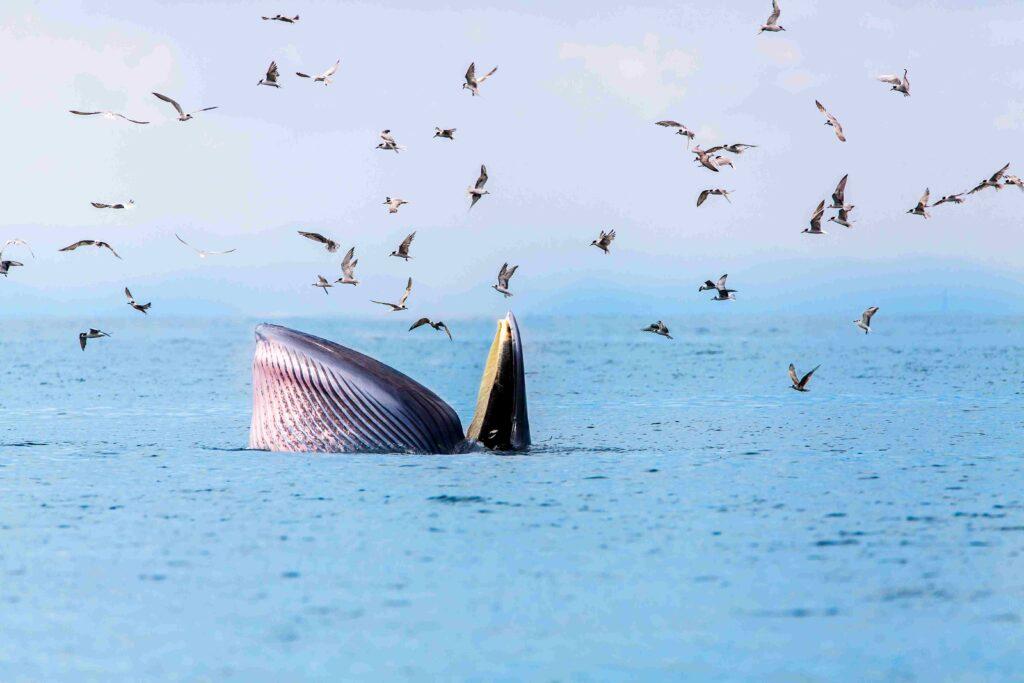
These four months concentrate the most whale activity. July and August are peak months, with practically guaranteed sightings. Sea conditions are optimal and operators report success rates close to 95%.
Extended season (May and October)
Some individuals arrive early or stay longer. May and October offer fewer tourist crowds and slightly lower prices, though sighting probability decreases to 60-70%.
What to expect on a watching tour
Tour preparations
Tours typically last 4-8 hours depending on whether they include additional islands. You’ll depart by boat from the coast, navigating to open sea where whales usually congregate.
Guides are experts at identifying signs: water spouts (the characteristic “spout”), dorsal fins, movements in the water. When they locate a whale, the captain turns off the engine and approaches cautiously respecting minimum safety distances.
Behaviors you might observe
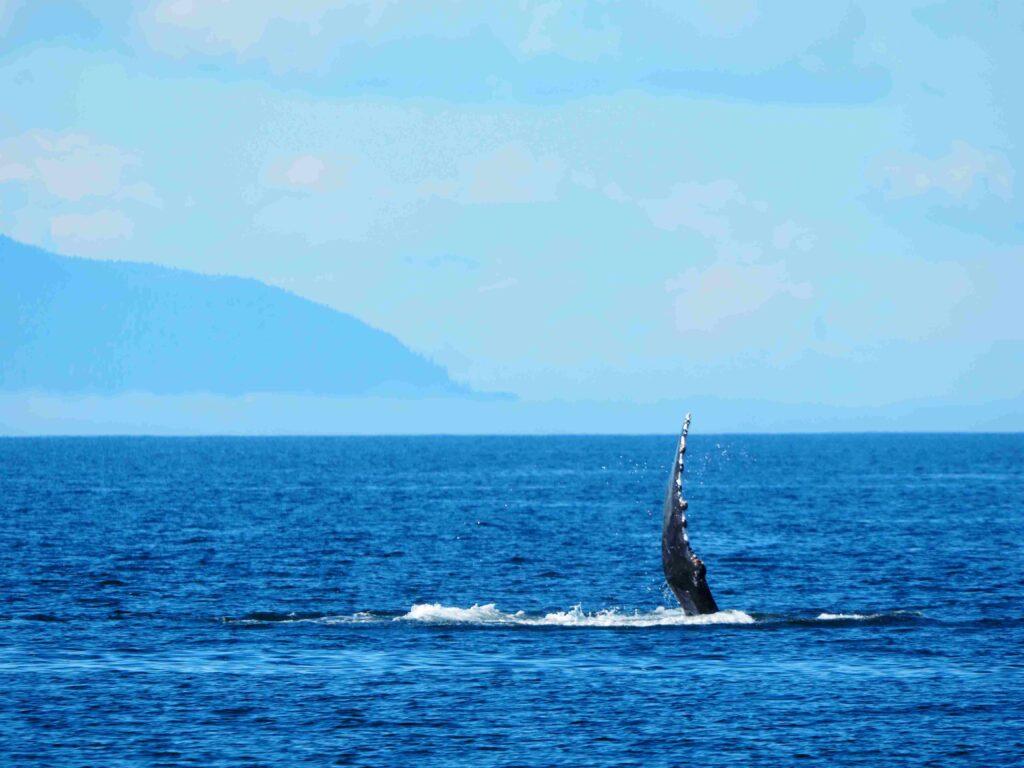
Breaching is the most spectacular behavior: the whale emerges from the water showing almost its entire body before falling, creating a massive water explosion. Scientists still debate why they do it: communication, play, or removing parasites.
Tail slapping and pectoral slapping are other common behaviors. You’ll also see spy-hopping, when the whale raises its head vertically to observe the environment.
Males perform elaborate displays to impress females. If you’re lucky, you’ll hear their underwater songs: complex series of sounds that travel kilometers under water.
Tips for successful whale watching
What to bring
- Biodegradable sunscreen
- Hat and sunglasses
- Windbreaker or light jacket
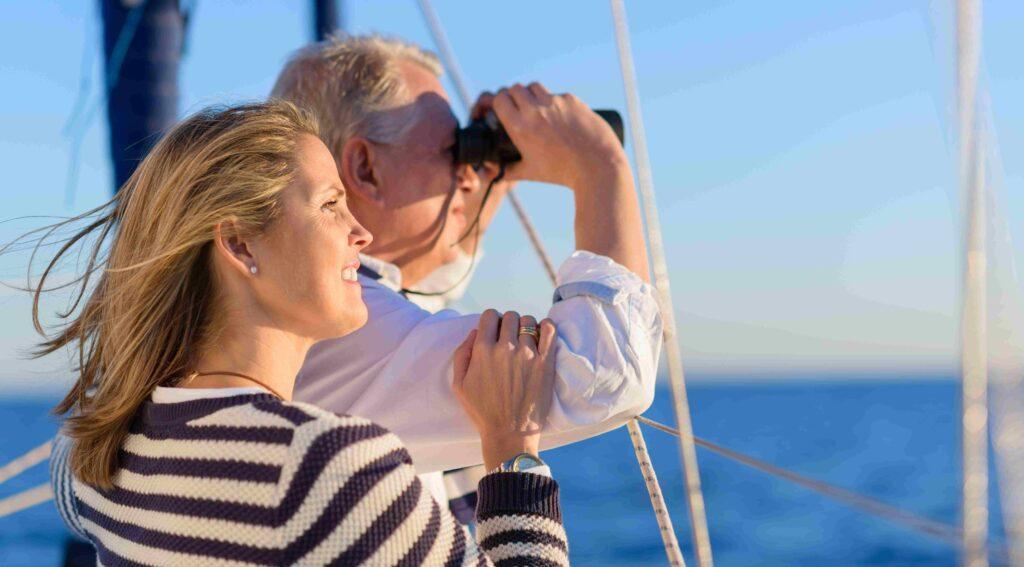
- Camera with good zoom (or binoculars)
- Seasickness medication if susceptible
- Water and snacks
- Waterproof bag to protect electronics
Photographing whales
Whale photography requires patience. Keep your camera ready with quick settings: high ISO, fast shutter speed (minimum 1/500), and burst mode activated. Whales are unpredictable; they appear where you least expect them.
Don’t obsess over the camera. Spend time simply observing and absorbing the experience. The mental memory is worth more than any photograph.
Responsible tourism
Ecuadorian regulations protect whales. Boats must maintain minimum distance of 200 meters when the engine is running, 100 meters with engine off. You should never swim with humpback whales or interrupt their natural behaviors.
Choose certified operators that respect these rules. Irresponsible tourism can stress the animals and affect their reproduction.
Combining whale watching with other destinations
Complete Ecuadorian coast route
After whale watching in Puerto López, explore nearby beaches. Los Frailes is one of Ecuador’s most beautiful beaches, with golden sand and crystal-clear waters. Montañita, two hours south, offers surfing and nightlife.
You can visit Machalilla National Park, home to tropical dry forest and humid forest, with trails and pristine beaches.
Connecting with Galapagos
Many travelers combine continental whale watching with a Galapagos trip. You fly from Guayaquil (near Puerto López) directly to the islands, extending your marine life experience.
Adding culture
From Puerto López you can visit coastal indigenous communities that maintain ancestral fishing traditions. Or head to the mountains to discover Andean villages and traditional markets. Ecuador’s festivals offer authentic cultural experiences throughout the year.
Other cetaceans you’ll see in Ecuador
Dolphins
Bottlenose dolphins and common dolphins are frequent in the same waters. They travel in large groups, jumping alongside boats in a display of pure energy. Unlike whales, dolphins are curious and often approach on their own.
Orcas
Though less common, orcas visit Ecuadorian waters, especially in Galapagos. These apex predators hunt in coordinated groups and are incredible to observe.
Pilot whales
These smaller whales (technically large dolphins) are found year-round in deep waters near Galapagos.
Conservation impact
Ecuador has made great efforts to protect its whales. Machalilla National Park and the Galapagos Marine Reserve are protected areas where hunting and commercial fishing are prohibited.
Whale watching tourism generates significant income for coastal communities, incentivizing conservation. Fishermen who once hunted whales now work as tour guides, becoming their greatest protectors.
Your encounter with ocean giants
Seeing a humpback whale in the wild is a transformative experience. These 40-ton, 15-meter-long animals demonstrate nature’s majesty. Their intelligence, complex social behavior, and vulnerability remind us of the importance of protecting our oceans.
Ecuador offers privileged access to these magnificent creatures in an environment of conservation and respect. Whether from Puerto López, Salinas, or Galapagos, your whale encounter will be one of the most memorable moments of your life.
Whale season is short but intense. Plan your visit between June and September, choose responsible operators, and prepare to connect with nature in the deepest way possible.

